Industrial Cleaning: What Warehouses and Plants Really Need
What industrial cleaning covers for Smyrna warehouses, plants, and distribution centers, how often each area needs it, safety basics, and how to plan it.

Walk through most warehouses at the end of a busy month and you'll see the same things. There's dust on the high racking, shrink wrap and pallet scraps in the corners, a sticky film around the dock doors, and a breakroom that's seen better days.
None of it stops production on its own. But together it slows people down, wears out equipment, raises safety risks, and makes a bad impression on the auditor or customer who walks through next.
Smyrna sits in one of the busiest industrial corridors in Middle Tennessee, with plants, distribution centers, and suppliers along I-24 and the roads around the Nissan Smyrna plant. This guide covers what industrial cleaning in Smyrna actually involves, how often each area needs it, and how to plan the work around operations.
Quick answers
How is industrial cleaning different from janitorial service?
Industrial cleaning deals with heavy dust, oils, high areas, and equipment, often with safety rules and lockout steps. Janitorial service is lighter routine upkeep like trash, restrooms, and floors.
Can industrial cleaning happen during production?
Often, if it is planned. Crews can work zone by zone, during shift changes, or on shutdown days so the cleaning does not stop the line.
How is industrial cleaning different from office cleaning?
Office cleaning is mostly about restrooms, trash, desks, and floors. Industrial cleaning covers those too, but it adds large open floors, high surfaces, equipment areas, loading docks, and safety rules that office crews don't deal with.
The scale is different as well. A warehouse floor may be hundreds of thousands of square feet, so the right machines, like ride-on scrubbers and sweepers, matter as much as the crew. If you're sorting out which kind of service fits your site, our guide to janitorial vs commercial cleaning explains the basic split.
What a full industrial clean usually covers
Every site is different, but most industrial cleaning services in Smyrna, TN include some mix of these areas:
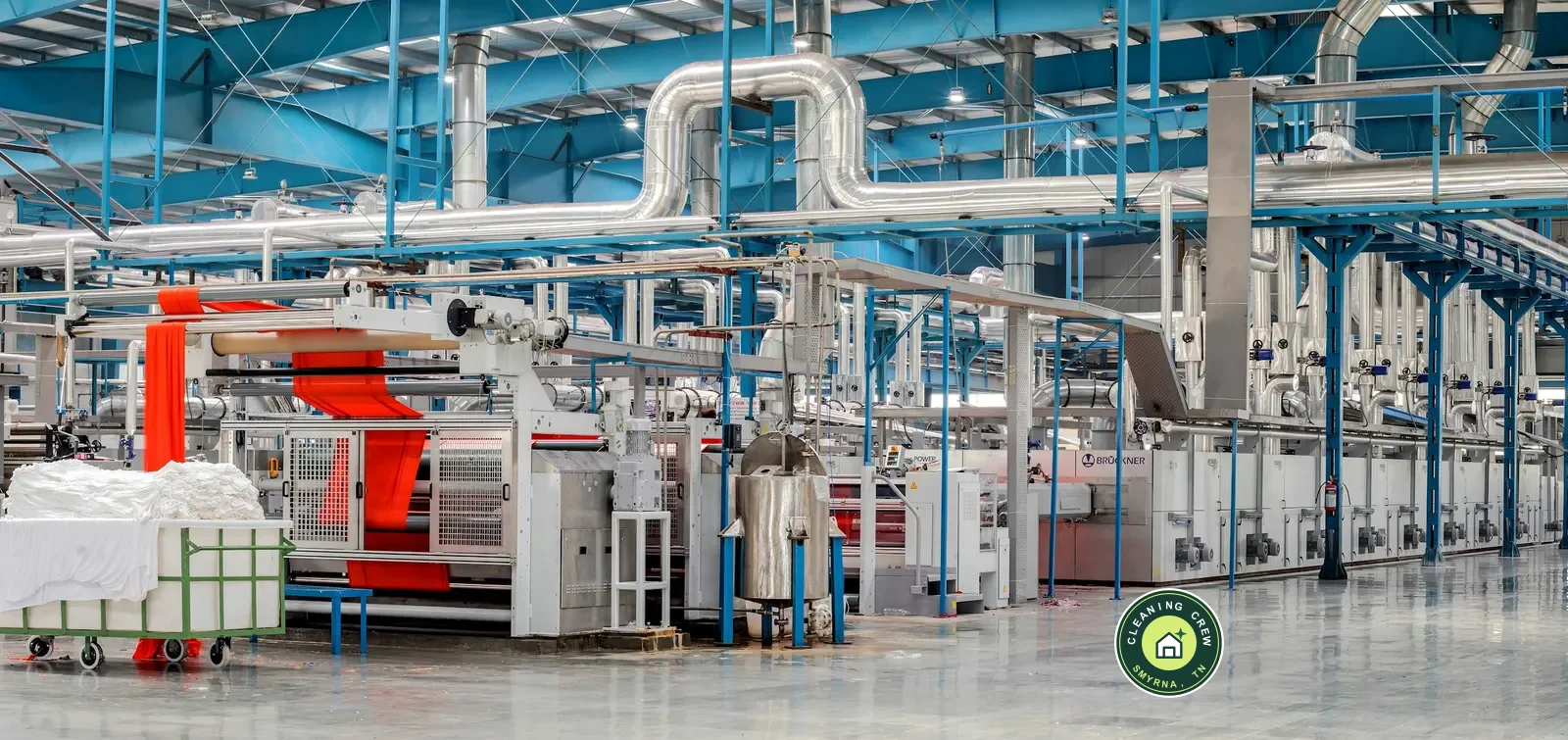
Production and warehouse floors
- Sweeping and scrubbing large concrete or sealed floors
- Removing oil, grease, and tire marks in traffic lanes
- Clearing debris from aisles, under racking, and along walls
- Keeping marked walkways and safety lines visible
High surfaces and overhead areas
- Dusting racking, beams, ledges, and pipes
- Cleaning light fixtures so lighting stays bright
- Removing cobwebs and dust from ceilings and vents
Loading docks and entrances
- Sweeping dock areas and clearing pallet debris
- Cleaning dock plates, bumpers, and door tracks
- Keeping entrances clear of mud and spills
Equipment surroundings
- Cleaning around machines, conveyors, and workstations, following your lockout rules
- Wiping control panels and touch points where approved
Support spaces
- Restrooms, locker rooms, and breakrooms
- Offices, training rooms, and reception areas
A safety issue, not just a looks issue
Clean floors and walkways are part of workplace safety. OSHA's walking-working surfaces rule (29 CFR 1910.22) requires work areas, passageways, and storerooms to be kept clean, orderly, and sanitary, and floors kept free of hazards like spills and debris where possible.
Dust is another concern. In some industries, fine combustible dust that collects on beams and ledges can become a fire or explosion risk. If your process creates that kind of dust, your safety team should set the cleaning frequency and method, and any cleaning partner should follow it.
There's also the plain business side. Clean sites tend to pass audits more smoothly, equipment runs longer when it isn't packed with grime, and new hires notice when a workplace looks cared for.
How often should each area be cleaned?
Frequency depends on your process, traffic, and safety rules. This is a common starting point that most sites adjust:
| Area | Typical frequency | Notes |
|---|---|---|
| Restrooms, breakrooms, locker rooms | Daily | Heavy use across shifts |
| Main traffic lanes and docks | Daily to weekly | Depends on forklift and truck traffic |
| Full floor scrub | Weekly to monthly | Ride-on scrubbers make large areas practical |
| Racking, beams, and high surfaces | Quarterly, or as your safety plan requires | More often where dust builds quickly |
| Light fixtures and vents | Quarterly to yearly | Dirty fixtures cut light levels |
| Deep clean of the whole site | Yearly, or before audits and shutdowns | Often timed with planned downtime |
How to plan cleaning around operations
The biggest challenge in warehouse cleaning is doing it without getting in the way. A few habits keep it smooth:
- Map the site first. Mark zones, traffic flow, restricted areas, and anything the crew must not touch.
- Match cleaning to shifts. Clean production areas between shifts, on weekends, or during planned downtime.
- Share your safety rules. PPE, lockout steps, forklift zones, and sign-in procedures should be part of the plan from day one.
- Separate daily and project work. Routine cleaning keeps the site running, while deep cleaning and high-level dusting are scheduled projects.
- Plan for waste. Pallets, packaging, and scrap pile up fast, so set up a haul-off plan for anything that won't fit the dumpsters.
What to ask a crew before they start
A commercial cleaning contractor for an industrial site needs more than a mop and a schedule. Ask these questions before you sign:
- Are you insured and bonded for industrial work, and can I see proof?
- What equipment will you use on our floors, and who maintains it?
- How do you train staff on safety rules, PPE, and lockout procedures?
- Can you work nights, weekends, or around shutdowns?
- How do you report issues you notice, like leaks or damaged racking?
- What does the written scope include, zone by zone?
Floors are often the biggest single job on an industrial site, and our floor care team handles scrubbing, sealing, and maintenance plans for concrete and sealed floors.
Questions from plant and warehouse managers
What does industrial cleaning in Smyrna include?
It usually covers production and warehouse floors, loading docks, high surfaces like racking and beams, areas around equipment, and support spaces like restrooms and breakrooms. The exact scope depends on your site and safety rules.
How often should a warehouse be cleaned?
Restrooms and breakrooms need daily attention, main traffic lanes daily to weekly, and full floor scrubs weekly to monthly. High surfaces are often cleaned quarterly or as your safety plan requires.
Can you clean without stopping production?
Yes, in most cases. We plan around shifts, weekends, and downtime, and we work zone by zone so operations keep running.
Do you follow our safety procedures?
Yes. We work to your site's PPE, sign-in, and lockout rules, and we'll go over them with your team before the first visit.
Do you clean food or pharmaceutical facilities?
Those sites have their own strict sanitation standards. Contact us with your requirements, and we'll tell you honestly whether the job is a good fit.
How do I get a quote for industrial cleaning services?
Request a free estimate and we'll walk the site with you, then send a written scope and price. See our industrial and commercial cleaning service for more detail.
Planning a cleanup for your site? Talk to the Smyrna-based cleaning and hauling crew that can handle the dust and the debris.
Industrial & Commercial Cleaning
Ready for a cleaner property?
Contact Cleaning Crew Smyrna to discuss your cleaning service and request a free estimate.